You've heard the pitch: newsletter sponsorships are the channel everyone's sleeping on. High engagement, opted-in audiences, no algorithm standing between your ad and the reader. But when you actually try to run one, it can feel surprisingly murky. Which newsletters should you sponsor? What's a fair CPM? How do you know if it worked?
This guide cuts through the noise. Whether you're running your first sponsorship or trying to scale what's already working, here's exactly how to do it — and how to use Paved to make the whole process faster and smarter.
TL;DR
- •Newsletter sponsorships offer CPMs of $3-$30+ for general lists, but this can vary.
- •Two formats: sponsored email (in-newsletter placement) and dedicated email (full takeover)
- •The five steps: set measurable goals, find the right newsletter, design native creative, track performance, and iterate
- •Audience fit matters more than audience size — niche lists consistently outperform large general ones
- •Paved lets you browse, book, manage, and measure newsletter sponsorships in one platform
What Is a Newsletter Sponsorship?
A newsletter sponsorship is a paid advertisement placed inside an email newsletter, reaching an audience that has actively chosen to subscribe. Unlike display ads or social posts, your message lands directly in someone's inbox — no feed algorithm, no ad blocker, no competition for attention from the content around it.
There are two main formats you'll encounter on Paved:
Sponsored Email (In-Newsletter Ad)
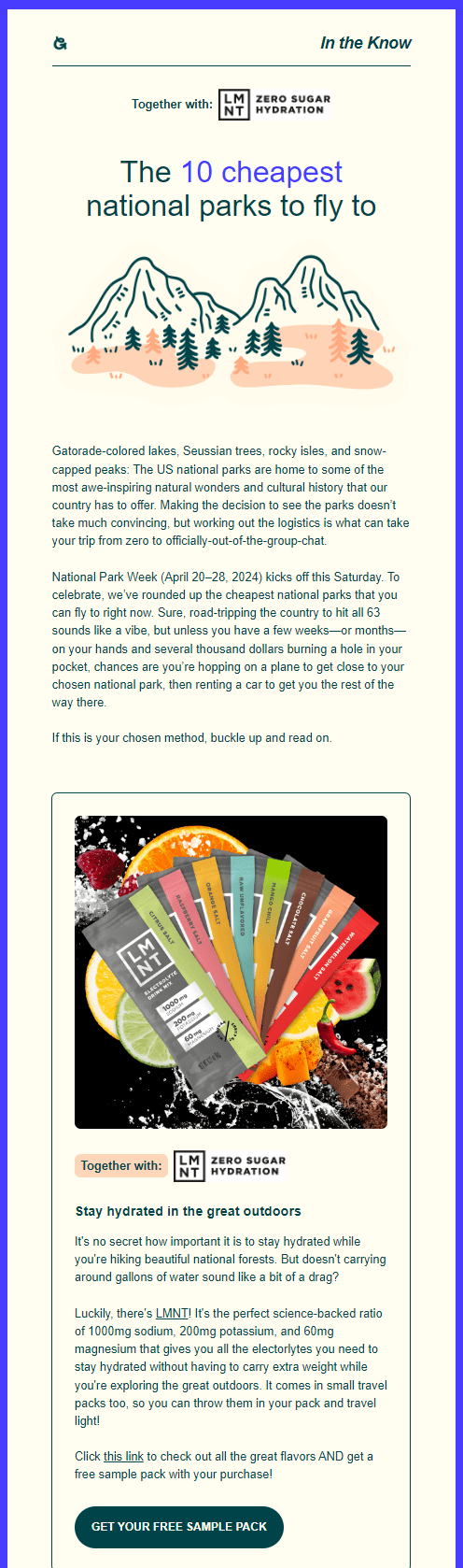
Your ad appears as a placement within a regular issue of the newsletter. It sits alongside the publisher's organic content, often in a dedicated section. This is the most common format and typically the most cost-effective way to reach a new audience.
Dedicated Email
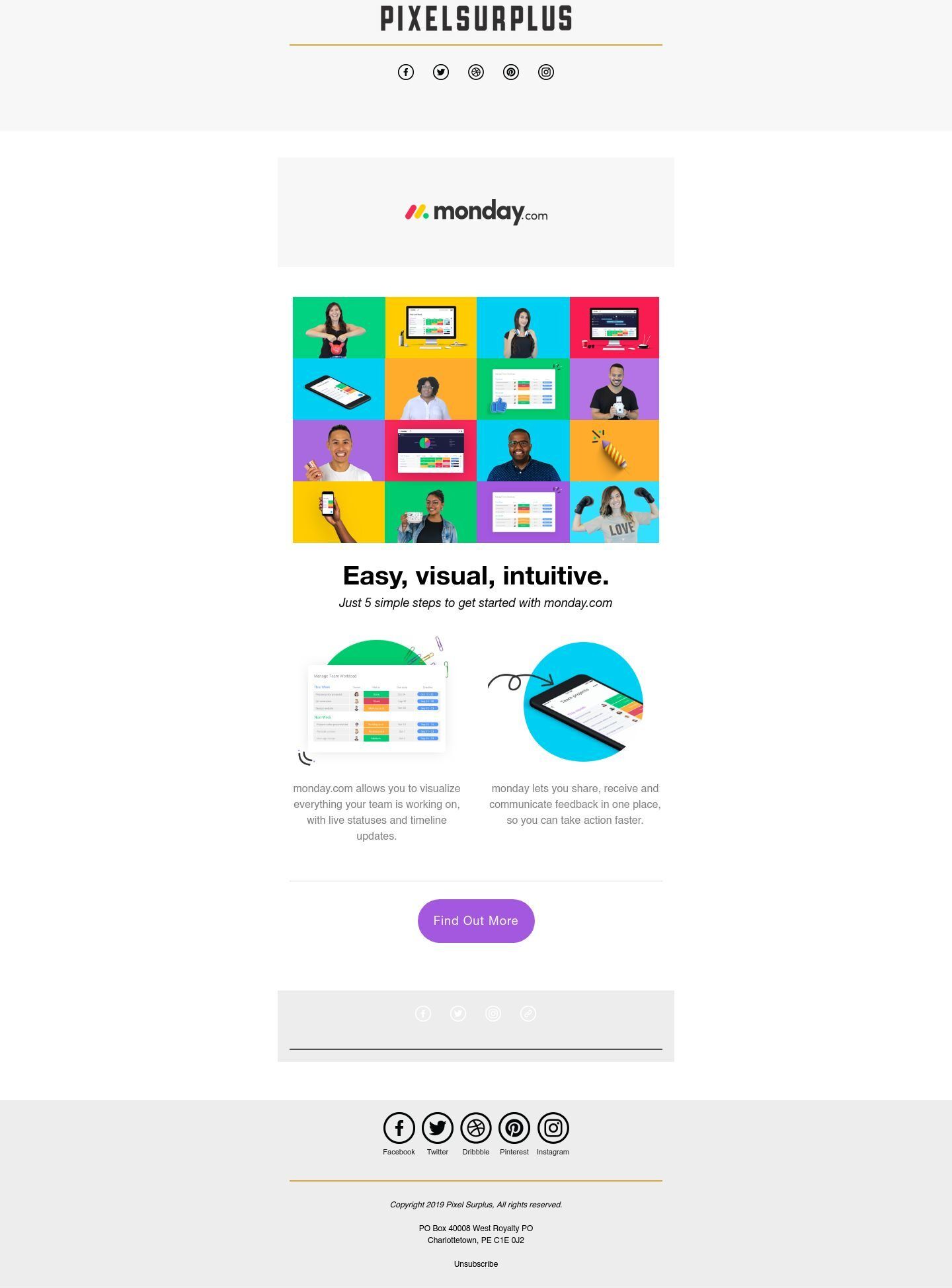
Your brand takes over the entire send. The publisher emails their full list on your behalf, with your message as the only content. It's similar to an email list rental — you temporarily borrow a trusted audience. Dedicated emails cost more due to exclusivity, but they consistently yield higher engagement and conversion rates.
Which should you choose? Start with sponsored placements to test a newsletter's audience before committing to a dedicated send. Once you find a list that converts, a dedicated email is worth the investment.
Why newsletter sponsorships? Display ads average $2 to $5 CPM. Newsletter sponsorships can range $6 to $30+. The reason for that gap: newsletter readers opted in, they open consistently, and they actually read. You're not buying an impression or a guess. You're buying attention from someone who chose to be there.
How To Run a Newsletter Sponsorship Campaign
Step 1: Define Your Goals Before You Spend Anything
The biggest mistake advertisers make is jumping straight to finding a newsletter without first knowing what success looks like. Your goal shapes every other decision: which newsletter you choose, what your creative says, and which metrics you track.
Ask yourself:
- •Brand awareness: Do you want to introduce your brand to a new, relevant audience?
- •Lead generation: Are you trying to drive sign-ups, downloads, or demo requests?
- •Direct sales: Is the goal to convert readers into customers in a single send?
- •Event promotion: Do you need registrations by a specific date?
Pick one primary goal per campaign. Trying to accomplish everything at once usually means accomplishing nothing clearly.
Once you have a goal, tie it to a measurable metric. Brand awareness campaigns might track click-through rate and landing page traffic. Lead gen campaigns should track cost-per-acquisition (CPA). This number will tell you whether to scale or move on.
Step 2: Find the Right Newsletter (This Is the Most Important Step)
No amount of great ad design or copywriting will save a sponsorship in the wrong newsletter. Audience fit is everything.
Here's what to look for when evaluating a newsletter:
| Factor | What to Look For |
|---|---|
| Niche/topic | Does the editorial content align with your product or offer? |
| Open rate | 30%+ is healthy; B2B newsletters often hit 35-45% |
| Click-through rate | 2-5% is a good range; below 1% is a red flag |
| Subscriber count | Bigger isn't always better — a smaller, engaged niche list often outperforms |
| CPM | Broad consumer: $3-30; niche audience: $30-75; Premium /executive: $75+ |
| Past sponsors | Do previous advertisers look like brands your audience would trust? |
The niche list advantage: A newsletter with 8,000 highly engaged DevOps engineers will almost always outperform a general tech newsletter with 100,000 passive subscribers. Relevance beats reach.
Finding newsletters that share this data publicly is the hard part when you're doing it manually. That's where Paved's Marketplace comes in: you can browse 2,000+ newsletters with transparent metrics, subscriber demographics, and verified engagement data — all in one place, without chasing down media kits.
Step 3: Design Creative That Earns the Click
Newsletter readers are smart. They can tell the difference between an ad that belongs in their inbox and one that was copy-pasted from a display campaign. Your creative needs to feel native to the publication.
A few principles that hold up across every niche:
- •Lead with the reader's problem, not your product. "Tired of losing deals to better-funded competitors?" lands harder than "Introducing [Product Name]."
- •One CTA, not three. Every link you add splits attention. Pick one action and make it obvious.
- •Match the newsletter's tone. A casual, conversational newsletter deserves casual, conversational copy. A buttoned-up finance newsletter calls for a different register.
- •Keep it short. You have a few seconds of attention. A headline, two or three sentences, and a CTA is usually enough.
If you're unsure how to match the voice of a specific newsletter, Paved's AI Creative Assistant can generate copy tailored to the publication's style — a real time-saver when you're running placements across multiple newsletters.
Your landing page matters too. It should pick up exactly where the ad left off. If your CTA says "Get the free guide," the landing page should open on the guide, not your homepage.
Step 4: Track Performance From Day One
Because newsletter sponsorships run in a defined window (usually a single send), performance data comes in fast. That's one of the channel's underrated advantages: you know within 48-72 hours whether a placement worked.
Key metrics to track:
- •Open rate — Was the subject line compelling? (Mostly the publisher's job, but worth noting.)
- •Click-through rate (CTR) — Did your creative earn the click?
- •Cost-per-click (CPC) — How efficient was your spend?
- •Conversion rate on landing page — Did clicks turn into leads or sales?
- •Cost-per-acquisition (CPA) — The number that tells you whether to scale or stop.
Before your campaign sends, confirm with the publisher which metrics they'll share. Most will provide opens and clicks at a minimum. On Paved, post-campaign reporting is built into the platform — you get a clean dashboard with all your metrics in one place, without having to chase anyone down for a spreadsheet.
Step 5: Iterate and Scale What Works
Your first newsletter sponsorship is a data point, not a verdict. Most advertisers who see strong long-term results from the channel run 5-10 tests before finding their best-performing newsletters and creative combinations.
Here's how to build on early results:
- •A newsletter that didn't convert? Check whether the audience was actually a fit, or whether the creative was the weak link. Test one variable at a time.
- •A newsletter that did convert? Book it again. And consider a dedicated email to go deeper with that audience.
- •Found a format that works? Scale it across similar newsletters in the same niche.
The compounding effect is real: advertisers who run consistent newsletter sponsorships over 3-6 months typically build a reliable acquisition channel with predictable CPA, rather than treating each placement as a one-off experiment.
How To Launch Your First Sponsorship on Paved
If you're ready to move from theory to your first booking, here's how the process works on Paved from start to finish.
1. Create your free advertiser account at paved.com/advertisers. No commitment required to browse.
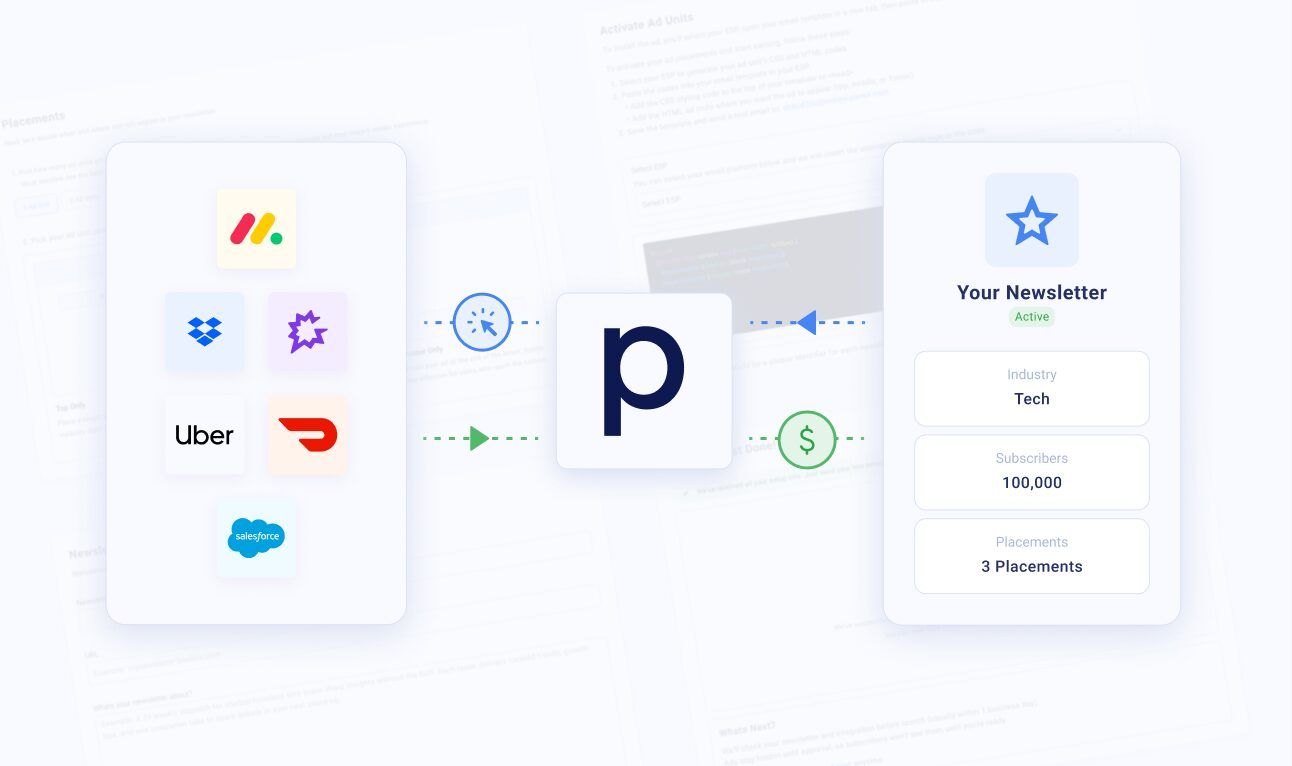
2. Search the Marketplace. Filter by topic, audience size, niche, or engagement metrics. You can browse top-rated newsletters, discounted placements, or category-specific lists like technology or HR newsletters.
3. Send a booking request. Once you've found a newsletter that fits, click "Book Sponsorship" to choose your format and preferred send date. The publisher typically responds within 48 hours.
4. Upload your creative. After the publisher accepts, you'll receive their creative specs and upload your ad copy and visuals directly to your Paved dashboard.
5. Pay and approve. Process payment through the platform, then review and approve the publisher's draft before it goes out. If anything needs adjusting, you can request changes directly.
6. Check your results. After the send, your performance data appears in the Reporting section of your Sponsorships dashboard. Opens, clicks, and CPC — all in one place.
7. Leave a review. Paved asks advertisers to rate the publisher after each campaign. Those reviews help the whole community find the best partners faster.
The entire process, from account creation to live campaign, can take as little as 1 week.
Ready to Run Your First Newsletter Sponsorship?
Newsletter sponsorships work because they meet readers where they already are: in a trusted inbox, reading content they chose to subscribe to. That's a fundamentally different environment than a social feed or a search results page — and advertisers who treat it differently get the results to prove it.
The channel rewards patience and iteration. Your first placement is a test. Your fifth is a strategy.
Sign up as an advertiser on Paved to browse 3,000+ newsletters, reach 253+ million subscribers, and launch your first campaign.